sleep on it
US /slip ɑn ɪt/
・UK /sli:p ɔn it/
A1
v. phr.Verb PhraseTo delay making a decision about something until the next day so that you have time to think about it carefully
Don't give me an answer now - sleep on it and tell me in the morning.
Video subtitles
IDIOM OF THE DAY - SLEEP ON IT
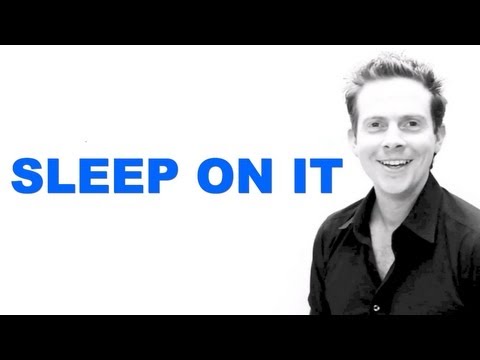
- To sleep on it. To sleep on it means that you need a night to make a decision about
To sleep on it. To sleep on it means that you need a night to make a decision about
- To sleep on it. To sleep on it means that you need a night to make a decision about
To sleep on it. To sleep on it means that you need a night to make a decision about
Hyatt House Sorrento Mesa: Spacious Suites & Homey Amenities

- The sofa bed was reasonably comfortable, I did sleep on it a couple nights, and tested it out, and it didn't hurt my back, it wasn't the most comfortable, but it got me through the night.
The sofa bed was reasonably comfortable, I did sleep on it a couple nights, and tested it out, and it didn't hurt my back, it wasn't the most comfortable, but it got me through the night.
- The bed is definitely way more comfortable, but I did sleep on it a couple nights because my dogs wanted to sleep with me, and they didn't fit on the other bed with me and my husband, it was just too crowded.
The bed is definitely way more comfortable, but I did sleep on it a couple nights because my dogs wanted to sleep with me, and they didn't fit on the other bed with me and my husband, it was just too crowded.
Why you need a good night's sleep ⏲️ 6 Minute English
- That old adage of if you've got a problem, sleep on it.
That old adage of if you've got a problem, sleep on it.
- We also have the saying, if you've got a problem, sleep on it.
We also have the saying, if you've got a problem, sleep on it.
Katy Perry on Her Relationship with John Mayer

- I think that's a good exercise is to if you feel like also, I have a few people that I'll be like, "Do you think I should do this?" And then they're like, "Well, you should sleep on it, probably." And I wake up the next day and I'm like, "Oh, yeah.
I think that's a good exercise is to if you feel like also, I have a few people that I'll be like, "Do you think I should do this?" And then they're like, "Well, you should sleep on it, probably." And I wake up the next day and I'm like, "Oh, yeah.
- "WELL, YOU SHOULD SLEEP ON IT, PROBABLY."
"WELL, YOU SHOULD SLEEP ON IT, PROBABLY."
Amazing Effects of Sleep (And Lack of It)

- Science says it's best to sleep on it.
Science says it's best to sleep on it.
- day no-sleep binge. Science says it's best to sleep on it.
day no-sleep binge. Science says it's best to sleep on it.
British English for POSITIVE PEOPLE! ??☀️ | English for YOUR Personality!! | ??
- Oh, just sleep on it and make a decision in the morning.
Oh, just sleep on it and make a decision in the morning.
- You should always sleep on it.
You should always sleep on it.
Imagine Life Without So Much Anxiety - Naval Ravikant

- You think through all the pros and cons, but then you sleep on it.
You think through all the pros and cons, but then you sleep on it.
- You think through all the pros and cons, but then you sleep on it.
You think through all the pros and cons, but then you sleep on it.
7 HYGIENE HACKS that completely CHANGED MY LIFE

- And yet, so many sleep on it even though it's so easy to fix.
And yet, so many sleep on it even though it's so easy to fix.
- Quickest way to go from a solid 10 to a lousy 2 and yet so many sleep on it.
Quickest way to go from a solid 10 to a lousy 2 and yet so many sleep on it.
14 English expressions about SLEEP
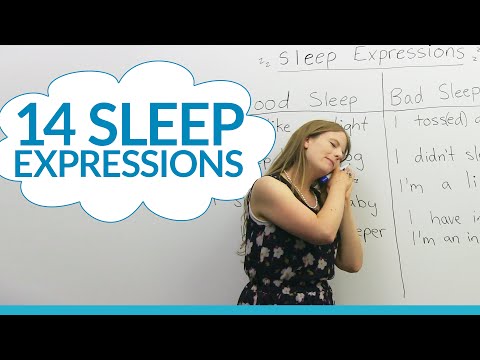
- Finally, the last expression I'm going to teach you today: "Sleep on it".
Finally, the last expression I'm going to teach you today: "Sleep on it".
- "Sleep", here, is also a verb. These are all verbs. "Let's sleep on it" means you have some sort of decision.
"Sleep", here, is also a verb. These are all verbs. "Let's sleep on it" means you have some sort of decision.
Barbara Oakley | Learning How to Learn | Talks at Google
- And by spacing things out, you realize now that you're getting those new synoptic connections growing every time you learn a little and then you sleep on it.
And by spacing things out, you realize now that you're getting those new synoptic connections growing every time you learn a little and then you sleep on it.
- every time you learn a little and then you sleep on it.
every time you learn a little and then you sleep on it.